
Common Ukrainian Greetings And When You Should Use Them

Author
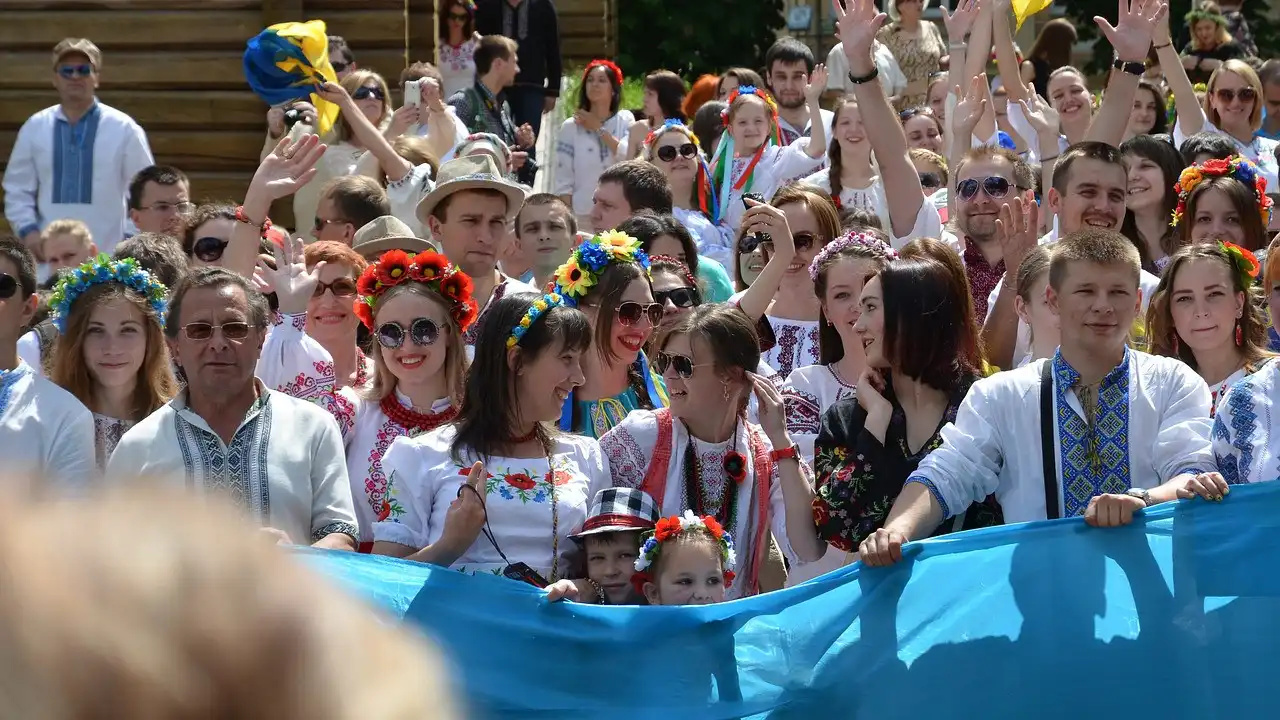
In Ukrainian, how you greet someone depends on who you are talking to.
Are you speaking to a close friend? A cashier at the supermarket? Or maybe your boss?
Ukrainian culture values politeness and respect, so using the right greeting is important.
But it’s not as complicated as it sounds.
In this guide, I’ll walk you through the most common Ukrainian greetings, when to use them, and how to sound natural.
Table of Contents:
The two most important ways to say hello
If you only remember two words from this article, make them pryvit and dobryi den.
These are the two pillars of Ukrainian greetings.
Pryvit (Informal)
Pryvit (Привіт) is the equivalent of “Hi” or “Hey” in English.
You should use this with friends, family, children, or people you know very well. It’s short, casual, and friendly.
However, be careful. If you use this with a stranger or someone older than you, it might sound a little rude or too familiar.
Привіт! Як справи?
Dobryi den (Formal/General)
Dobryi den (Добрий день) translates literally to “Good day”.
This is the standard greeting in Ukraine. You can use it in almost any situation. It works for shopkeepers, teachers, doctors, or strangers on the street.
If you are ever unsure which greeting to use, choose dobryi den. It’s always polite and never wrong.
Добрий день. У вас є кава?
Greetings for different times of day
While dobryi den works for most of the daylight hours, we have specific greetings for the morning and the evening.
Using these shows that you have a better command of the language.
Here is a simple table to help you remember them:
| Ukrainian | Pronunciation | English Meaning | When to use |
|---|---|---|---|
| Добрий ранок | Dobryi ranok | Good morning | Until about 11:00 AM or 12:00 PM |
| Добрий день | Dobryi den | Good day | From 12:00 PM until 6:00 PM |
| Добрий вечір | Dobryi vechir | Good evening | After 6:00 PM |
| Добраніч | Dobraniich | Good night | Only when going to sleep |
A note on pronunciation
You might notice that for “Good morning,” “Good day,” and “Good evening,” the first word is Dobryi.
This means “good” (masculine form).
However, “Good night” is Dobraniich (or sometimes Na dobraniich). We only say this when someone is actually going to bed or leaving a party late at night to go home and sleep. You would not say it to a cashier at a late-night grocery store.
The patriotic greeting
Since the war in Ukraine started, you’ll hear another greeting very often: Slava Ukraini (Glory to Ukraine).
The correct response to this is Heroiam Slava (Glory to the Heroes).
While this is a patriotic slogan, it has become a common greeting in everyday life as well. It shows solidarity.
How to ask “how are you?”
Once you have said hello, the next step is usually to ask how the person is doing.
Just like in English, this is often just a politeness and not a request for a detailed medical history!
Yak spravy?
This is the most common phrase. It literally means “How are things?” or “How are affairs?”
Привіт, як справи?
Common responses
If someone asks you Yak spravy?, here are the best ways to reply:
- Dobre (Добре) - Good.
- Normalno (Нормально) - Fine / Okay.
- Tak sobi (Так собі) - So-so.
- Chudovo (Чудово) - Great / Wonderful.
In Ukraine, it’s also polite to ask back. You can simply say A u tebe? (And you? - informal) or A u vas? (And you? - formal).
Добре. А у тебе?
Saying goodbye in Ukrainian
Just like with “hello,” there are formal and informal ways to say goodbye.
Do pobachennya (Formal)
This is the standard “Goodbye”. It literally means “Until seeing (each other again).”
You use Do pobachennya (До побачення) in the same situations where you would use Dobryi den. It’s perfect for leaving a shop, a meeting, or saying goodbye to someone you respect.
Pa-pa (Informal)
This is my favorite. Pa-pa (Па-па) is very common, especially in Western Ukraine (like Lviv), though it’s understood everywhere.
It comes from the influence of Polish and other European neighbors. It’s equivalent to “Bye-bye”.
You use this with friends and family. It sounds warm and friendly.
Па-па! До завтра.
A note on formal vs. informal (Ty and Vy)
I’ve mentioned “formal” and “informal” a few times in this guide.
In English, “you” is just “you”. But in Ukrainian (and many other languages), we have two versions.
- Ty (Ти) - This is the singular, informal “you”. Use it with friends, family, God, and children.
- Vy (Ви) - This is the plural or formal “you”. Use it with strangers, older people, authority figures, or when addressing a group of people.
When you are meeting someone for the first time, it’s safer to use Vy forms (like Dobryi den).
Once you get to know them, they might say, “Let’s switch to Ty.” This is a sign of friendship!
Summary
Here’s a quick cheat sheet for you:
- Meeting a friend: Pryvit! Yak spravy? (Hi! How are things?)
- Meeting a stranger: Dobryi den. (Good day.)
- Leaving a shop: Do pobachennya. (Goodbye.)
- Leaving a party: Pa-pa! (Bye!)
The best way to learn these is to use them. Don’t be afraid of having an accent.
Ukrainians are generally very happy when foreigners try to speak their language.